
We started Basalt because we believed the most capable AI systems should be open, not locked behind proprietary APIs.
Three years in, that conviction hasn't changed. If anything, it's gotten sharper. The concentration of frontier AI capability in a handful of closed labs is not a stable equilibrium for the field or the world.
We exist to offer an alternative: a lab that publishes its weights, its methodology, and its mistakes, and still does work at the frontier.

How we got here.
Chen Mingzhi and Li Wenjuan met at a workshop on RLHF in 2022. Chen was at Tencent AI Lab; Li had just returned from DeepMind. They agreed on a diagnosis: the frontier was moving quickly, the scrutiny wasn't keeping pace, and the labs doing the most capable work were publishing less and less.
They incorporated Basalt in March 2023 with twelve researchers and a lease in Zhongguancun. The plan was simple: build open, publish everything, take safety seriously as a scientific discipline rather than a PR function.
Three years, 38 published papers, and one flagship model later, the plan hasn't meaningfully changed.
How we work
Six principlesOpen by default
We publish weights, training details, evaluation code, and safety methodology. We default to openness when there isn't a compelling safety reason to restrict.
Empirical over ideological
When experiments contradict our assumptions, we update the assumptions.
Safety in parallel
Safety research runs on the same timeline as capability research, with equal compute and veto authority.
Legible to the world
If we can't explain a decision, that's a signal the decision needs more scrutiny. The world doesn't need less information about it.
Long-term thinking
We're building infrastructure for the AGI transition, not a product cycle.
Collaborative by nature
We share research openly, work with other labs on safety standards, and engage constructively with critics. We don't believe in winning through secrecy.
Leadership
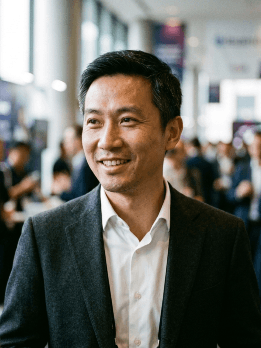
Previously led applied ML research at Tencent AI Lab. PhD from Tsinghua in statistical learning theory.

Six years at DeepMind working on RL and alignment. Co-authored foundational papers on scalable oversight.
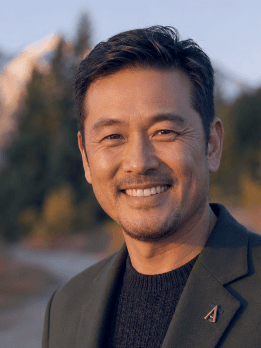
Former principal engineer at Bytedance infrastructure. Led the compute platform behind TikTok's recommendation systems.
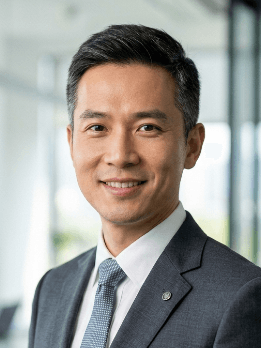
Previously at the Beijing Academy of AI and the Centre for the Governance of AI. Works on alignment evaluation methodology.